Golf Card Game vs Rummy: Which Should You Play?
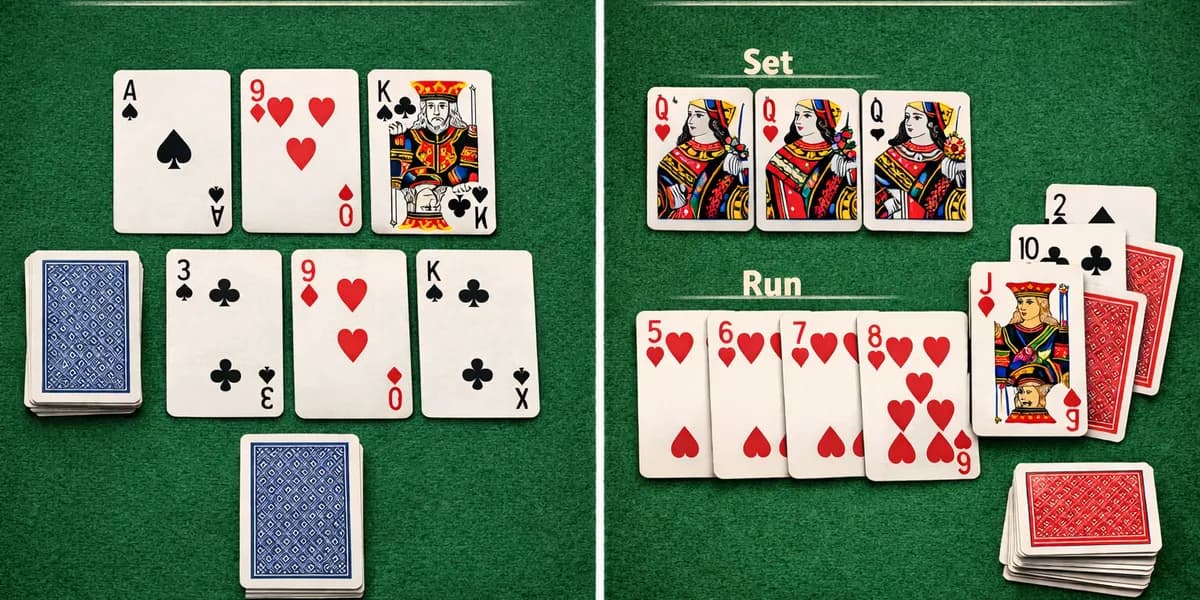
Both Golf Card Game and Rummy are classic draw-and-discard card games that have entertained players for generations. At first glance, they might seem similar—you draw cards, discard unwanted ones, and try to improve your hand. But after playing both games extensively, I can tell you they're fundamentally different experiences that appeal to different types of players.
Golf is a race to the lowest score, where memory and strategic card placement matter more than hand-building. Rummy is about forming sets and runs, where hand management and planning ahead are everything. Understanding these differences will help you choose the game that matches your play style, available time, and social preferences.
In this comprehensive comparison, we'll break down everything you need to know: complexity, play time, skill requirements, social dynamics, and more. By the end, you'll know exactly which game is right for you—or whether you should play both!
Quick Comparison
| Feature | Golf Card Game | Rummy |
|---|---|---|
| Objective | Lowest score wins | Form sets and runs |
| Complexity | Low to Medium | Medium to High |
| Play Time | 15-20 minutes | 30-45 minutes |
| Learning Curve | 5 minutes | 15 minutes |
| Player Count | 2-6 players | 2-6 players |
| Skill vs Luck | 70% skill, 30% luck | 60% skill, 40% luck |
| Key Skill | Memory, positioning | Hand management |
| Social Style | Quiet, focused | Interactive, chatty |
| Best For | Quick games, solo play | Longer sessions, groups |
What is Golf Card Game?
Golf Card Game is a strategic card game where players arrange cards in a 2x3 grid (6 cards) and compete to achieve the lowest cumulative score over 9 rounds, called "holes." Each player starts with 6 cards face-down, flips two to begin, and then takes turns drawing from either the deck or discard pile to swap cards and improve their position. The goal is simple: minimize your score by replacing high-value cards (Queens, Jacks, 10s) with low-value ones (Aces, 2s, Kings).
What makes Golf unique is its emphasis on memory and spatial strategy. You need to remember which cards are where in your grid, plan for vertical pairs (which score zero points), and make calculated decisions about when to take from the discard pile versus drawing blind. The game rewards players who can think several moves ahead while managing the information they have about their own cards and tracking what opponents are discarding. It's deceptively simple to learn but offers deep strategic depth for players who want to master it.
What is Rummy?
Rummy is a classic card game where players aim to form "melds"—either sets (three or more cards of the same rank, like three 7s) or runs (three or more consecutive cards of the same suit, like 5-6-7 of hearts). Players start with a hand of cards, draw from either the deck or discard pile each turn, and discard one card. The first player to meld all their cards (or get rid of all cards in some variants) wins the round and scores points based on the cards remaining in opponents' hands.
Rummy is fundamentally about hand management and probability. You need to evaluate multiple potential melds simultaneously, decide which cards to keep and which to discard, and read your opponents' strategies based on what they're picking up and discarding. The game requires you to balance building your own hand while potentially blocking opponents from completing their melds. It's more complex than Golf because you're managing a larger hand (typically 7-13 cards depending on the variant) and making decisions about multiple potential winning combinations.
5 Key Differences
1. Objective: Lowest Score vs Making Sets and Runs
This is the most fundamental difference. In Golf, you're trying to minimize points. Every card has a point value (Kings are 0, 2s are -2, Queens are 10, etc.), and you want the lowest total. You're not trying to "complete" anything—you're trying to optimize what you have. A game of Golf is like a series of puzzles where you're constantly swapping pieces to find the best arrangement.
In Rummy, you're trying to form specific combinations. You need sets (three or four of a kind) or runs (consecutive cards of the same suit). Until you can lay down all your cards in valid melds, you're accumulating penalty points. Rummy is more like solving a jigsaw puzzle where you need specific pieces to complete the picture, while Golf is more like optimizing a score by rearranging what you have.
This difference affects every decision you make. In Golf, you might keep a King (0 points) even if it doesn't help you form pairs, because it's already optimal. In Rummy, a card is only valuable if it fits into a potential meld—otherwise, it's dead weight that you need to discard. The scoring systems reward completely different strategies.
2. Strategy Depth: Memory vs Hand Management
Golf rewards spatial memory and positional strategy. You need to remember which cards are in which positions of your 2x3 grid, because positioning matters—vertical pairs cancel out to zero points. Expert Golf players develop mental maps of their grid and can instantly recall "I have a Queen in position 4, and a 7 in position 1." This memory component adds a unique cognitive challenge that Rummy doesn't have.
Rummy rewards hand management and probability calculation. You're holding 7-13 cards and need to evaluate multiple potential melds simultaneously. Should you keep that 5 of hearts hoping to complete a 3-4-5 run, or discard it to work on a set of 8s? You need to calculate the odds of drawing the cards you need, consider what opponents might be collecting (based on their discards), and manage multiple potential winning paths.
Both games require strategic thinking, but they exercise different mental muscles. Golf is more about memory and spatial reasoning—"Where is that card, and how can I position it optimally?" Rummy is more about probability and multi-variable decision-making—"What are my chances of completing this meld, and is it worth the risk?" Neither is inherently better, but they appeal to different cognitive strengths.
3. Play Time: 15-20 Minutes vs 30-45 Minutes
A standard game of Golf (6 cards, 9 holes) typically takes 15-20 minutes. Each hole is relatively quick—players are managing only 6 cards, and holes end when someone flips all their cards. The Quick variant (4 cards, 6 holes) can finish in 10-15 minutes, making Golf perfect for short breaks, waiting rooms, or when you want a quick strategic challenge.
A game of Rummy usually takes 30-45 minutes, sometimes longer depending on the variant and number of players. Players are managing larger hands (7-13 cards), and games continue until someone goes out. Multiple rounds are often played to reach a target score (like 500 or 1000 points), which can extend a full game session to an hour or more.
This time difference makes Golf more accessible for casual play. You can squeeze in a game during a coffee break or play several games in the time it takes to play one game of Rummy. Rummy is better suited for dedicated game sessions where you want to settle in for a longer experience. Neither is better—it depends on how much time you have and what kind of experience you're looking for.
4. Learning Curve: 5 Minutes vs 15 Minutes
Golf is remarkably easy to learn. The basic rules can be explained in 2-3 minutes: arrange 6 cards, flip two, draw and swap to lower your score, pairs in columns score zero. A new player can be playing competently within 5 minutes. The strategic depth reveals itself over time, but the barrier to entry is very low. This makes Golf excellent for introducing new players to card games or playing with mixed skill levels.
Rummy has a steeper learning curve. New players need to understand what constitutes a valid meld (sets vs runs), when you can lay down cards, how scoring works, and the various rules about discarding and picking up. Different Rummy variants (Gin Rummy, 500 Rummy, etc.) have different rules, which adds complexity. It typically takes 15 minutes of explanation and a practice round or two before a new player feels comfortable.
This learning curve difference means Golf is more accessible for casual or mixed groups. You can teach someone Golf and have them playing competitively in the same session. With Rummy, you might need to dedicate more time to teaching before everyone can play at a similar level. Again, neither is better—Golf is more beginner-friendly, while Rummy offers more complexity for players who want a deeper learning experience.
5. Social Dynamics: Silent Focus vs Interactive Play
Golf tends to be a quieter, more focused game. Players are managing their own grids, tracking their own cards, and making internal calculations. While you can certainly chat during Golf, the game rewards concentration and memory, so players often play in relative silence, especially when learning or playing competitively. This makes Golf great for situations where you want a strategic challenge but don't need constant interaction—playing solo against AI, or with friends who prefer thoughtful games.
Rummy is more naturally interactive and social. Players are constantly evaluating what opponents are picking up and discarding, trying to read their strategies, and making decisions based on opponent behavior. The "reading your opponent" aspect encourages conversation and observation. Rummy games often involve more table talk, speculation about what others are holding, and social interaction. It's a better choice for game nights where conversation and interaction are part of the appeal.
This social difference extends to online play too. Golf works excellently as a solo game against AI because the focus is on your own optimization. Rummy can feel less engaging against AI because part of the fun is reading human opponents and their unpredictable strategies. If you're looking for a game to play alone or with minimal interaction, Golf is the better choice. If you want a more social, interactive experience, Rummy might suit you better.
Which Game Is Right for You?
Choose Golf Card Game If:
- ✓You want quick games (15-20 minutes) that fit into short breaks or busy schedules
- ✓You enjoy memory-based challenges and spatial strategy games
- ✓You prefer playing solo or want a game that works well against AI opponents
- ✓You want a game that's easy to teach to new players (5-minute learning curve)
- ✓You enjoy focused, strategic gameplay without needing constant social interaction
- ✓You like games where skill and memory can consistently overcome luck
Choose Rummy If:
- ✓You want longer, more immersive game sessions (30-45 minutes per game)
- ✓You enjoy hand management, probability calculation, and multi-variable decision-making
- ✓You prefer social, interactive games with more table talk and opponent reading
- ✓You want a game with more complexity and a steeper learning curve to master
- ✓You enjoy games where you're building toward specific combinations (sets and runs)
- ✓You have a dedicated group for game nights and want a longer, more involved experience
Why not play both? Many card game enthusiasts enjoy both Golf and Rummy for different occasions. Golf is perfect for quick solo sessions or when you have limited time. Rummy is ideal for longer game nights with friends. Having both in your repertoire gives you flexibility to match the game to the situation.
Golf Card Game and Rummy are both excellent draw-and-discard card games, but they offer fundamentally different experiences. Golf rewards memory, spatial strategy, and quick optimization in 15-20 minute sessions. Rummy rewards hand management, probability calculation, and social interaction in 30-45 minute games. Neither is objectively better—they're different tools for different situations.
If you're looking for a quick, strategic game that you can play solo or teach quickly, Golf is your game. If you want a longer, more complex experience with more social interaction, Rummy might be a better fit. The best approach? Try both and see which one resonates with your play style. You might find, like many players do, that both games have a place in your rotation.
Ready to try Golf Card Game?
Experience the strategic depth and quick gameplay that makes Golf unique. Play now—it's free and takes just 5 minutes to learn!