Golf Card Game Strategy
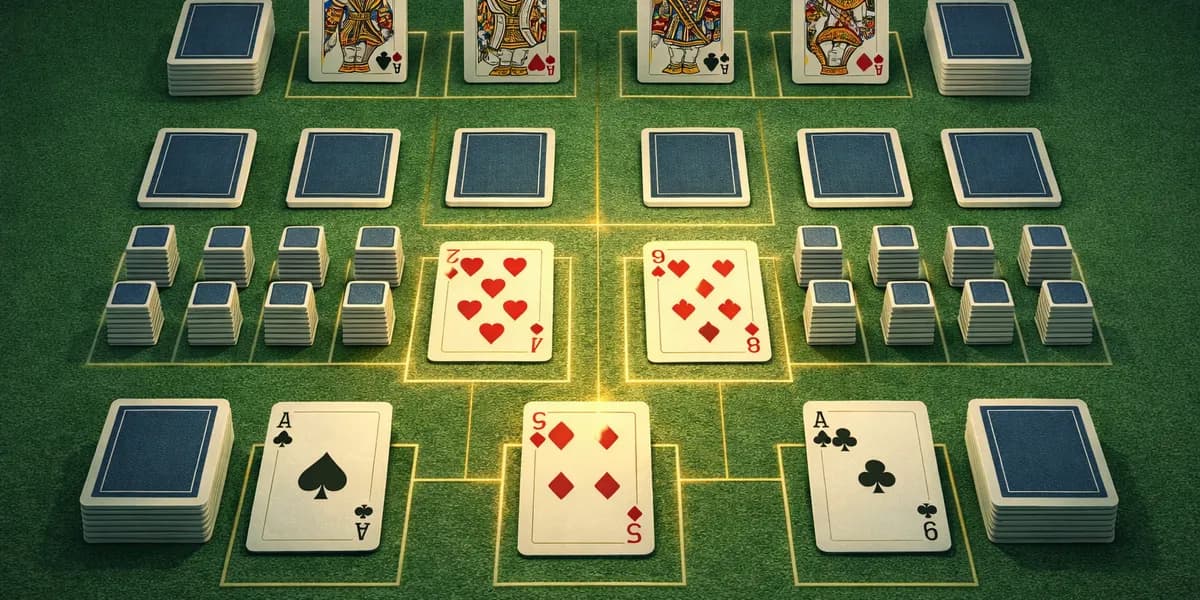
Master the art of Golf card game (also known as Polish Poker or Cabo) with these proven strategies. Whether you're just starting out or looking to improve, these tips will help you lower your score and win more games. If you're new to the game, start with our how to play guide or beginner's guide first.
What Are the Best Tips for Beginners?
1. Prioritize Low-Value Cards
Always swap (exchange a drawn card with one in your grid) out high cards (Jacks & Queens—the worst cards worth 10 points each) for lower ones when possible.Kings (0 points) and 2s (the most valuable cards at -2 points) are your best friends—grab them whenever you see them!
2. Watch the Discard Pile
Pay attention to what other players are discarding. If someone throws away a King or a 2, consider taking it on your next turn. The discard pile (face-up cards that have been discarded) is public information—use it!
3. Plan for Vertical Pairs
Remember that a vertical pair (two matching cards in the same column—vertical stack of 2 cards) scores 0 points. If you have a high card face-up, try to pair it with another of the same value in the column below it. This can turn a 10-point card into 0 points!
4. Don't Rush to Flip Cards
You don't need to flip (turn face-up) all your cards quickly. Sometimes it's better to keep face-down cards (hidden cards you haven't seen) until you know what you want to swap them with. The last player to flip all cards gets one final turn, so there's no penalty for being strategic.
Intermediate Strategies
Column Management
Think of your 2×3 grid (two rows, three columns) as three columns, not six individual cards. When you swap a card, consider:
- What's already in that column?
- Can you create a pair by placing a matching card?
- Is this column already low-value, or does it need work?
Discard Pile Strategy
When you draw from the discard pile, you must swap it. This means:
- Only take from discard if you have a good swap target
- Use it to complete pairs or replace high cards
- Be careful—other players can see what you're taking
Timing Your Flips
The player who flips all cards first ends the hole (one round of play). Consider:
- If you're ahead, you might want to end the hole quickly
- If you're behind, keep cards face-down to get more turns
- Sometimes it's worth taking a slightly worse card to end the hole on your terms
What Mistakes Should You Avoid?
Ignoring the pair rule
Don't forget that vertical pairs score 0. Always look for opportunities to pair cards!
Flipping cards too quickly
There's no rush. Keep cards face-down until you have a good swap planned.
Not watching the discard pile
Other players' discards tell you what they don't want—valuable information!
Swapping without a plan
Every swap should have a purpose: lower your score, create a pair, or set up a future play.
Advanced Tips
Memory and Tracking
Try to remember which cards have been played, especially Kings and 2s. If you've seen several Kings already, there are fewer left in the deck.
Risk vs. Reward
Sometimes it's worth taking a risk. If you have a 10 and see another 10 in the discard pile, taking it to create a pair (0 points) is better than keeping the single 10 (10 points).
Endgame Strategy
In the final holes, every point counts. Be extra careful with your swaps and prioritize absolute value over potential pairs if you're close to winning.
Frequently Asked Questions
What's the most important strategy for beginners?
Prioritize replacing high-value cards (Queens, Jacks, 10s) first. Swapping a Queen for a 3 saves 7 points, while swapping a 3 for a 2 only saves 5. Focus on eliminating your highest cards before optimizing lower ones.
Should I always take from the discard pile if I see a low card?
Only if you have a clear swap target. Taking from the discard pile forces you to swap—you can't discard it. If you don't have a high card to replace, drawing from the deck gives you more flexibility.
When should I try to create pairs instead of just getting low cards?
Pairs become valuable when you have high cards you can't easily replace. Two Queens in a column (0 points) beats replacing one Queen with a 5 (still 15 points total). Actively pursue pairs for cards 7 and higher.
How do I know when to end the hole by flipping all my cards?
End the hole when you're confident you have the lowest score. Good indicators: mostly low cards (5 or below), one or more pairs, and opponents still have face-down cards. Ending early limits their opportunities to improve.
Is memory really that important in Golf card game?
Yes. Knowing where your face-down cards are lets you make instant decisions when good cards appear. Expert players remember all 6 positions. Start by mentally numbering positions 1-6 and noting each card as you see it.