10 Expert Tips for Winning at Golf Card Game
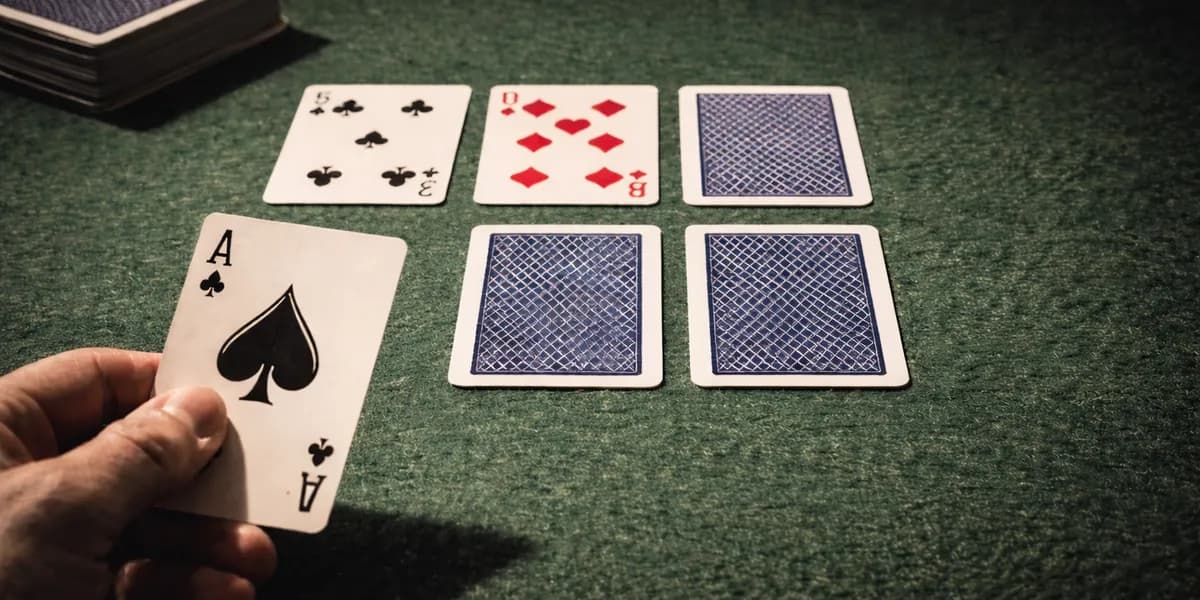
Golf card game might seem simple at first glance—just flip cards and try to get the lowest score, right? But here's the secret: beneath those straightforward rules lies a deeply strategic game where every decision matters. The difference between a casual player and an expert isn't luck; it's understanding the subtle tactics that can shave 10-20 points off your final score.
These expert tips work across all game variants—whether you're playing the Classic 6-card version, the Quick 4-card variant, or the Extended 18-hole format. The core strategies remain the same, though the execution might vary slightly based on the number of cards and holes. Master these principles, and you'll find yourself consistently beating AI opponents at any difficulty level.
Ready to transform your game? These 10 expert strategies will help you think like a pro, make better decisions under pressure, and consistently achieve lower scores. Let's dive in.
1. Memorize Your Layout Early
One of the biggest mistakes beginners make is treating their face-down cards as complete unknowns. Expert players know that memory is your secret weapon. From the moment you flip your first two cards, start building a mental map of your entire 2x3 grid.
Here's why this matters: if you know that your bottom-left card is a Queen (10 points) and you draw a 3 from the deck, you can immediately swap them without hesitation. But if you haven't memorized your layout, you might waste precious turns flipping cards randomly, hoping to find a good swap target.
Develop a memory system that works for you. Some players mentally number their positions (1-6, left to right, top to bottom). Others remember cards by their relative positions ("the high card in the middle column"). The key is consistency—use the same system every game until it becomes automatic.
Pro tip: When you flip a card, immediately note its position and value. Don't just think "I have a King"—think "I have a King in position 4 (bottom-middle)". This spatial awareness will dramatically speed up your decision-making process.
2. Target High Cards First
It might seem obvious, but you'd be surprised how many players waste turns swapping low-value cards when they have Queens, Jacks, or 10s still face-down. The math is simple: replacing a 10-point card with a 3-point card saves you 7 points. Replacing a 3-point card with a 2-point card only saves you 1 point.
Always prioritize flipping and replacing your highest-value cards first. If you have a Queen (10 points) face-down and you draw a King (0 points), that swap is worth 10 points. If you have a 4 face-down and draw that same King, the swap is only worth 4 points. The opportunity cost is huge.
Here's a concrete example: imagine you have two face-down cards—one is a Queen, one is a 2. You draw a King from the deck. If you swap it with the 2, you've saved 2 points (since 2s are worth -2). But if you swap it with the Queen, you've saved 10 points. Always choose the higher-value target.
This strategy becomes even more critical in the later holes when every point counts. By the 7th or 8th hole, you should have eliminated all your 10-point cards. If you still have Queens or Jacks face-down, you're playing catch-up, not playing to win.
3. The Middle Columns Are Your Friends
Your 2x3 grid has three columns, and not all columns are created equal. The middle column gives you the most information because it's flanked by two other columns. When you flip cards in the middle column, you can see how they relate to both adjacent columns, making it easier to plan pair strategies.
Here's the strategic advantage: if you flip the top-middle card and it's a 7, and then you flip the bottom-middle card and it's also a 7, you've just created a zero-point column. But if those same 7s were in the left and right columns, you wouldn't get that benefit—only vertical pairs count.
Expert players often flip their middle column cards first because it provides maximum strategic flexibility. Once you know what's in the middle, you can make informed decisions about the outer columns. For example, if your middle column has a high card, you might prioritize finding a matching card to pair it with, rather than trying to replace it with a low card.
This doesn't mean you should ignore the outer columns—far from it. But think of the middle column as your strategic anchor. Use it to guide your decisions about the rest of your grid. If you can pair the middle column, you've essentially eliminated one-third of your potential points for that hole.
4. Know When to Take from the Discard Pile
The discard pile is public information, and that makes it incredibly valuable—but also risky. When you take a card from the discard pile, you must swap it (you can't just discard it). This means you need to have a clear plan before you grab that visible card.
The golden rule: only take from the discard pile if you have a specific, high-value swap target. If you see a King in the discard pile and you have a Queen face-up, that's a no-brainer—take it immediately. But if you see a 5 in the discard pile and all your face-up cards are already 5 or lower, taking it is a waste of a turn.
Here's a more nuanced scenario: you see a 7 in the discard pile. You have a 7 face-up in your middle column, and a 10 face-down in the same column. Should you take it? Yes! Taking that 7 and swapping it with your face-down 10 gives you a pair (0 points) instead of 17 points (7 + 10). That's a 17-point swing in a single move.
Remember: the discard pile tells you what other players don't want. If you see multiple high cards (Queens, Jacks, 10s) being discarded, it means those cards are still in circulation. Use this information to gauge what might still be in the deck. If three Queens have been discarded, there's only one left, making it less likely you'll draw one.
5. Don't Rush to Knock
In some Golf variants, players can "knock" to signal they think they have the lowest score. But even in standard Golf, there's a similar principle: don't rush to flip all your cards just because you can. The player who flips all their cards first ends the hole, but everyone else gets one final turn—and that final turn can be devastating if you're not ready.
The math is crucial here. If you flip your last card when you have a score of 15, but your opponent has two face-down cards that could be anything, you're giving them a chance to improve. If those face-down cards are both 10s (20 points), they're at 20+ already. But if they're both 2s (-4 points), they're way ahead of you.
Expert players flip their last card strategically, not automatically. If you're confident you have a low score and you want to end the hole quickly (maybe you're ahead and want to lock in your lead), then flip away. But if you're behind or uncertain, keep that last card face-down as long as possible. Every extra turn gives you more chances to improve your position.
Here's a concrete example: you have one face-down card left, and you're currently at 12 points for the hole. Your opponent has three face-down cards. You draw a 4 from the deck. If you swap it with your face-down card and it turns out to be a 2, you've improved to 10 points. But if you flip your last card first and reveal a 2, then draw that 4, you're stuck at 14 points. The order matters.
6. Master the 2-Point Penalty
When you draw from the deck and immediately discard the card without swapping, you must flip one of your face-down cards. This is often called the "penalty" for not improving your hand. But here's the thing: it's not always a penalty. Sometimes, it's a strategic move.
The key is understanding when the information is worth the risk. If you draw a terrible card (like a Queen) and you have no good swap targets, discarding it and flipping a random card might reveal something useful. For example, if you flip a King (0 points), you've actually gained information without losing points. You now know you have a 0-point card, which is valuable.
However, if you're in the late game and you have mostly low cards face-up, taking the penalty is risky. You might flip a high card that you can't easily replace. In this situation, it's often better to swap the bad card with your worst face-up card, even if it's not ideal. A 7 replacing a 10 is still better than potentially revealing a 10 that you can't swap.
Advanced players use the penalty strategically to control information. If you need to know what's in a specific position to plan your next few moves, sometimes taking the penalty to flip that card is worth it. But always calculate the risk: what's the worst card you could flip, and can you afford that outcome?
7. Pair Your Columns for Zero Points
This is one of the most powerful strategies in Golf, and yet many players don't fully exploit it. When you have two matching cards in the same vertical column, that entire column scores zero points. This means a pair of Queens (normally 20 points) becomes 0 points. A pair of 10s (normally 20 points) becomes 0 points. This is game-changing.
The strategy here is to actively work toward pairs, not just hope they happen. If you have a 7 face-up in your left column, and you draw another 7, don't just swap it with a random high card. Put it in the same column as your existing 7. You've just turned 14 points into 0 points.
Here's an advanced technique: if you have a high card (like a Queen) face-up and you see another Queen in the discard pile, take it and pair them. Yes, you're "wasting" a turn that could have been used to replace the Queen with a low card. But pairing two Queens gives you 0 points, while replacing one Queen with a 3 still leaves you with 3 points. The pair is mathematically superior.
Special case: pairs of 2s are even better. Since 2s are worth -2 points each, a pair of 2s gives you -4 points for that column. That's not just zero—it's negative, which actively improves your score. If you ever have the chance to pair 2s, do it immediately. It's one of the strongest moves in the game.
8. Track Your Opponent's Discards
The discard pile isn't just about what you can take—it's a window into your opponent's strategy. Every card they discard tells you something about their hand. Expert players use this information to make better decisions about their own moves.
Here's what to watch for: if your opponent discards a low card (like a 3 or 4), it probably means they already have better cards in that position, or they're trying to create a pair. If they discard a high card (like a Queen), they're either replacing it with something better, or they're desperate and don't have good options. Both scenarios give you information.
More importantly, tracking discards helps you understand what's still in the deck. If you've seen three Kings discarded, there's only one left. If you're hoping to draw a King, your odds just got much worse. Conversely, if you've seen zero 2s discarded and you're halfway through the deck, there are still four 2s available, making it more likely you'll draw one.
Against AI opponents, this tracking is especially valuable because AI follows predictable patterns. Beginner AI tends to discard high cards more aggressively. Expert AI is more strategic, so their discards reveal less—but they still reveal something. Use every piece of information available to you.
9. Adjust Strategy by Difficulty Level
Playing against Beginner AI is fundamentally different from playing against Expert AI, and your strategy should reflect that. Beginner AI makes more mistakes, so you can afford to take more risks. Expert AI plays nearly optimally, so you need to be more conservative and precise.
Against Beginner AI, you can focus on your own score optimization. The AI will make suboptimal moves, so you don't need to worry as much about blocking their strategies. You can take more time to set up perfect pairs, wait for ideal cards, and play more defensively. Your goal is to minimize your own score, and the Beginner AI won't pressure you much.
Against Intermediate AI, you need to balance offense and defense. The AI will make good moves, so you need to be more proactive. Don't wait for perfect cards—take good cards when they're available. The AI will take advantage of your hesitation, so you need to stay competitive throughout the game.
Against Expert AI, every decision matters. The AI will rarely make mistakes, so you need to play near-perfect Golf. This means prioritizing point reduction over complex strategies. Don't try to set up elaborate pair combinations—focus on consistently replacing high cards with low cards. Expert AI will capitalize on any inefficiency, so you need to be efficient yourself. Every point you save is a point the AI can't beat you by.
10. Practice with Quick Variant First
If you're new to Golf or trying to improve your skills, start with the Quick variant (4 cards, 6 holes) before tackling the Classic game. Here's why: the Quick variant gives you faster feedback loops, more practice opportunities, and less cognitive load, making it the perfect training ground.
With only 4 cards instead of 6, you have less to track, which means you can focus on mastering the core strategies without getting overwhelmed. You'll play more games in the same amount of time, giving you more opportunities to practice memory, pair formation, and discard pile reading. Each game is a complete learning experience, and you can immediately apply what you learned to the next game.
The 6-hole format also means games finish faster, so you can experiment with different strategies without committing 20-30 minutes to a single game. Try an aggressive pairing strategy in one game, then try a conservative low-card strategy in the next. Compare the results and see what works for your play style.
Once you're consistently winning Quick games, you'll have internalized the core strategies. Then, when you move to Classic (6 cards, 9 holes), you're just scaling up what you already know. The additional cards and holes add complexity, but the fundamental principles remain the same. You'll find that your Quick variant practice translates directly to Classic success.
These 10 expert tips transform Golf from a luck-based card game into a skill-based strategic challenge. The difference between a casual player and an expert isn't the cards you draw—it's how you use them. By memorizing your layout, targeting high cards, understanding column strategy, and making informed decisions about discards and pairs, you can consistently lower your scores by 10-20 points per game.
Remember: mastery comes from practice. Don't expect to implement all 10 tips perfectly on your first game. Start with one or two strategies, get comfortable with them, then add more. Before you know it, you'll be thinking several moves ahead, reading the discard pile like a book, and consistently beating AI opponents at any difficulty level.
Ready to put these tips into practice?
Play now and see your scores improve!
Frequently Asked Questions
What's the single biggest mistake beginners make?
Flipping cards randomly instead of targeting high-value cards. Every turn spent on a low card (3, 4, 5) instead of a Queen or Jack is a missed opportunity. Always know where your worst cards are and replace them first.
How do expert players consistently beat AI opponents?
Three key skills: (1) perfect memory of all 6 card positions, (2) tracking which cards have been discarded to know what's still in the deck, and (3) strategic timing—knowing when to end the hole to limit opponent turns.
Should I play differently against Expert AI vs Beginner AI?
Yes. Against Beginner AI, you can take time to set up pairs and wait for optimal cards. Against Expert AI, prioritize efficiency—take good cards immediately rather than waiting for perfect ones. The AI will capitalize on any hesitation.
What score should I aim for per hole?
Beginners: aim for under 15 per hole. Intermediate: aim for under 10. Advanced: aim for under 5, with occasional negative scores from 2s and pairs. Track your average to measure improvement over time.
Is there any luck in Golf card game, or is it all skill?
Both. Card draws involve luck, but skill determines how you use them. Over a 9-hole game, skilled players consistently beat less skilled ones because they make better decisions with the cards they receive. Estimate: 70% skill, 30% luck.